Detect and Respond to Identity Threats After Login
Reveal analyzes identity behavior after authentication to detect insider threats, compromised credentials, and non-human identity misuse – without agents, rules, or operational overhead.
Reveal understands what identities actually do after login – across systems – where misuse, lateral movement, and privilege abuse occur.
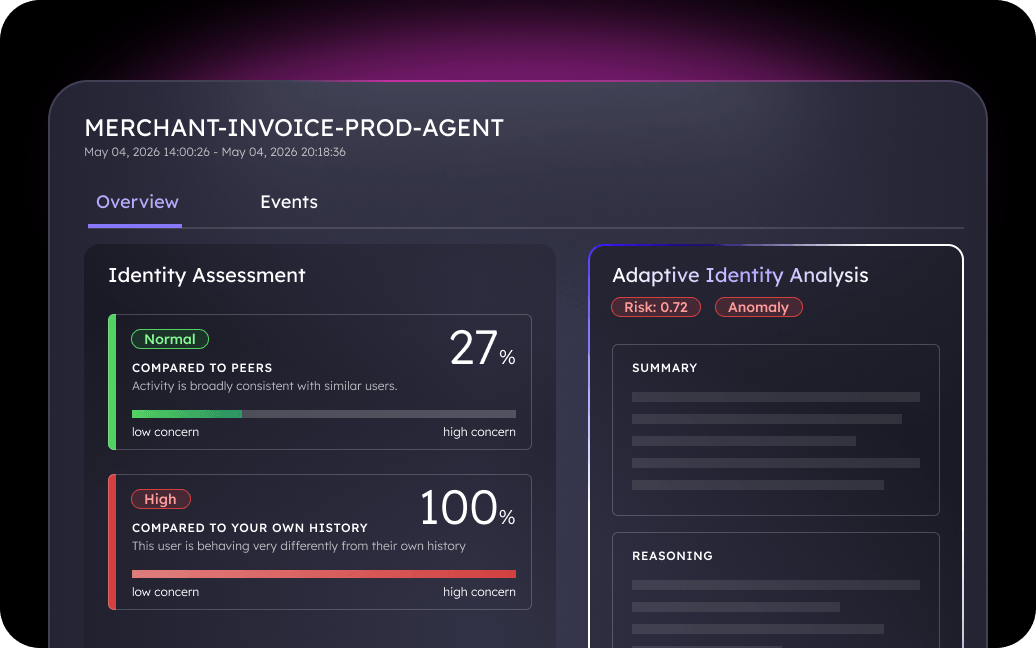
Instead of rules or static thresholds, Reveal learns normal identity behavior and surfaces meaningful deviations that indicate risk.
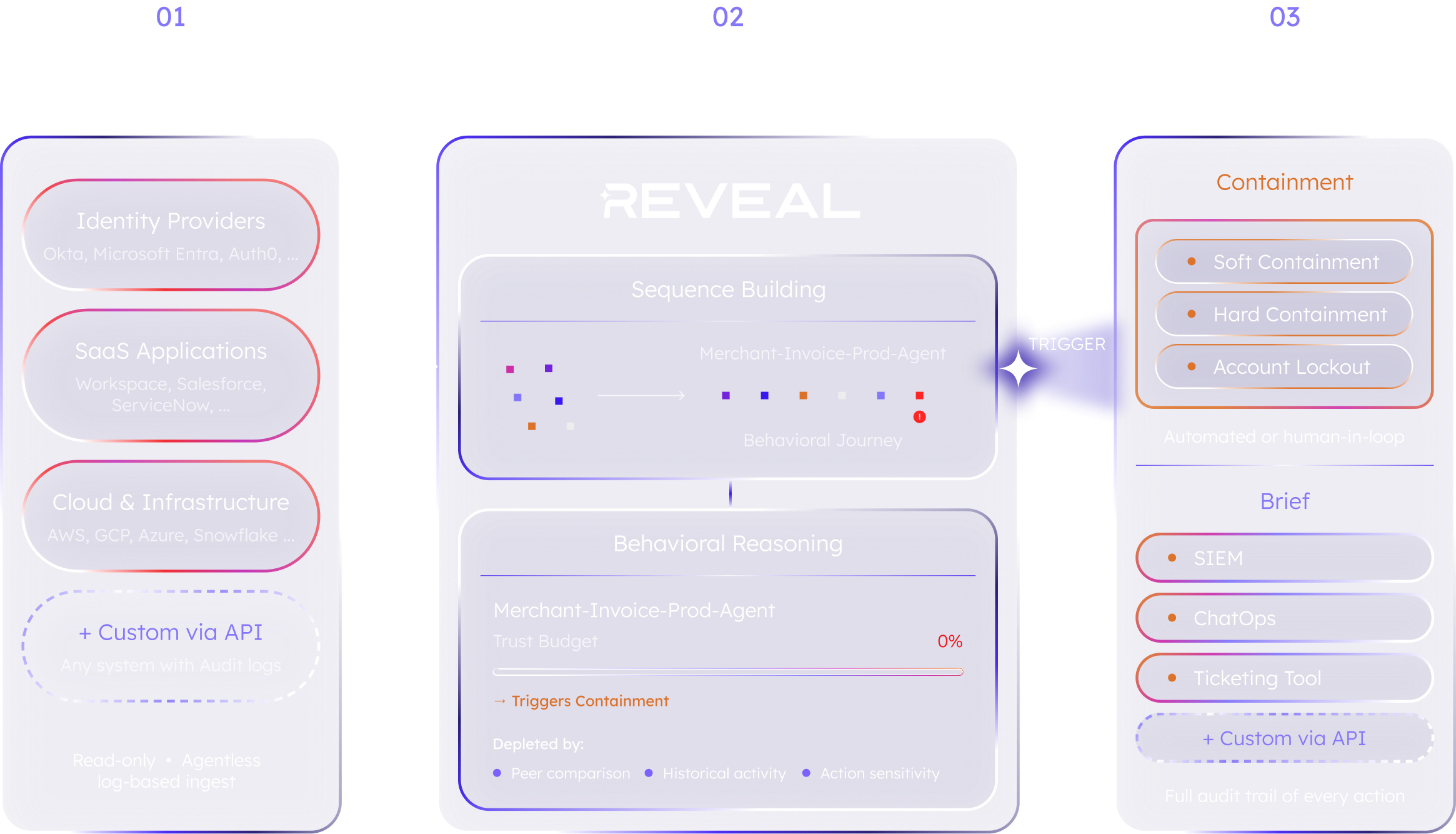
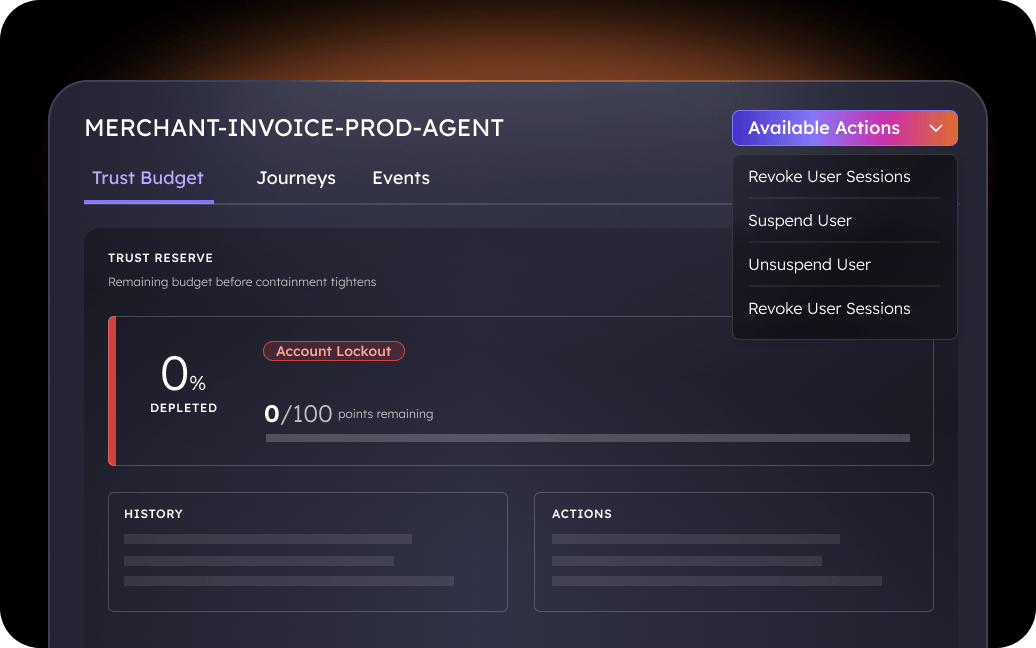
When risky behavior is detected, Reveal automatically intervenes to contain threats before damage occurs – reducing response time and manual effort.
Reveal consumes identity-related security and audit telemetry from applications and infrastructure using read-only, log-based access.
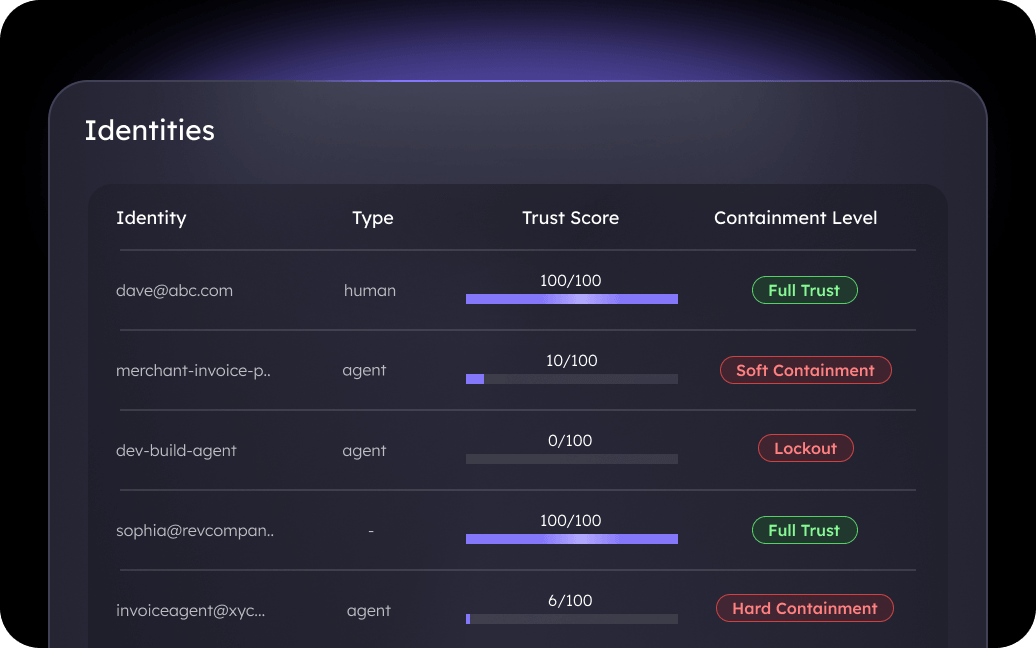
Reveal continuously learns how identities behave after authentication, establishing behavioral baselines across users, service accounts, and AI agents.
When behavior deviates in security-relevant ways, Reveal surfaces investigation-ready insights and automatically intervenes to contain risk.
Insights are surfaced at the identity-behavior level, not raw log events.
Modern identity threats rarely rely on known indicators. They exploit legitimate access and blend into normal activity, evading event- and IOC-based detection.
Proven in High-Stakes Environments
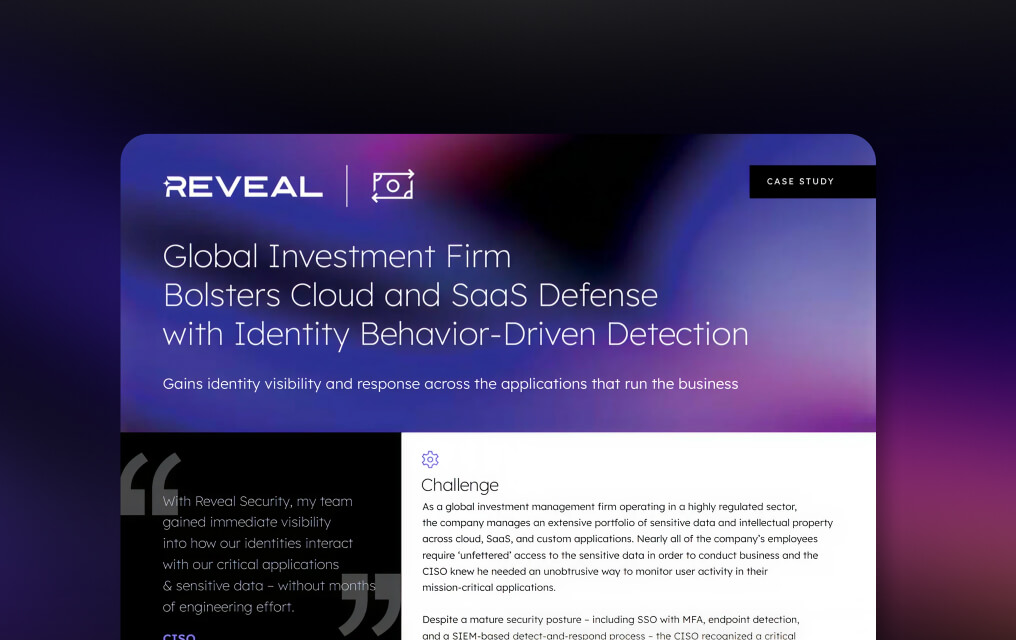
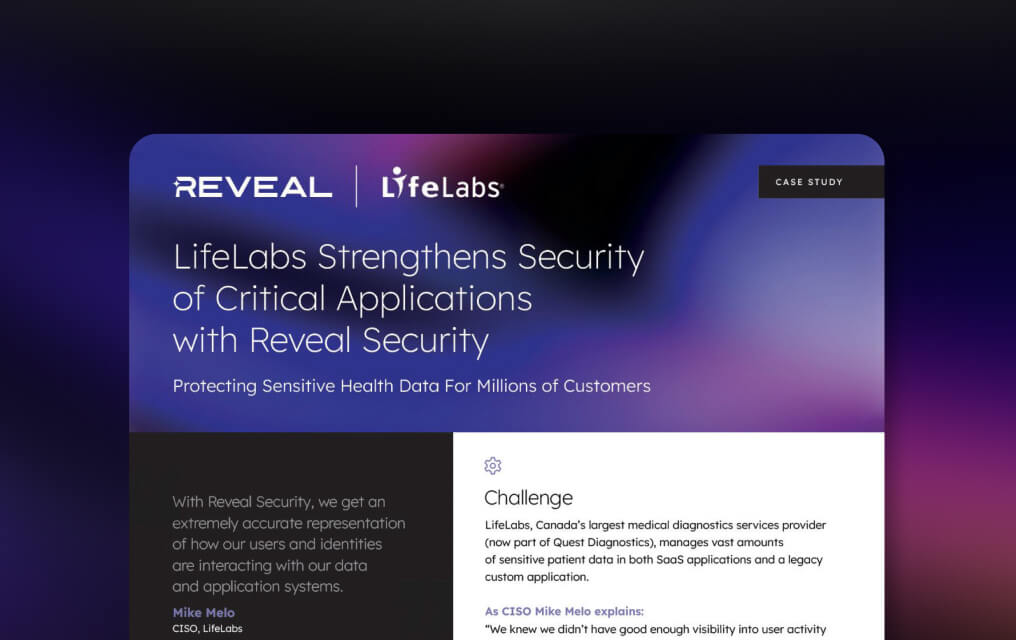
Reveal is deployed in regulated enterprises where identity threats emerge after authentication and traditional controls fall short.
FINANCIAL SERVICES
Detecting and responding to post-authentication identity threats across critical applications.
HEALTHCARE
Gaining behavioral visibility into identity activity across sensitive data and application systems.
Built for Modern Identity Environments
Employees, contractors, administrators, and privileged users operating across applications and infrastructure.
Service accounts, API keys, service principals, and automation identities operating continuously.
Autonomous and semi-autonomous agents acting on behalf of users or systems.

Read-only access to identity-related telemetry

Log-based ingestion from existing systems

No agents or custom detection rules required

No manual log parsing or correlation required